Responsible use
TikTok downloads, copyright, and permission: a practical guide
A plain-language overview of responsible downloads, creator permission, attribution, and common misconceptions.
Downloading is not the same as owning
Copyright generally belongs to the person who created a work unless rights were transferred or another rule applies. Being able to watch or download a public video does not transfer that copyright to you.
Possessing a file and owning rights in its content are separate things. A download may be technically possible while a planned repost, edit, advertisement, or sale is not authorized.
This guide is general information, not legal advice. Rules vary by country and by the facts of each use. If a project carries legal or commercial risk, speak with a qualified professional.
Personal saving and public reuse are different
A creator may be comfortable with someone saving a reference copy but object to seeing the clip on another account. Public reuse can affect context, audience, revenue, safety, and the creator’s relationship with people shown in the video.
Before moving from private viewing to public use, pause and ask. Do not assume that a lack of objection is permission.
When permission is clearest
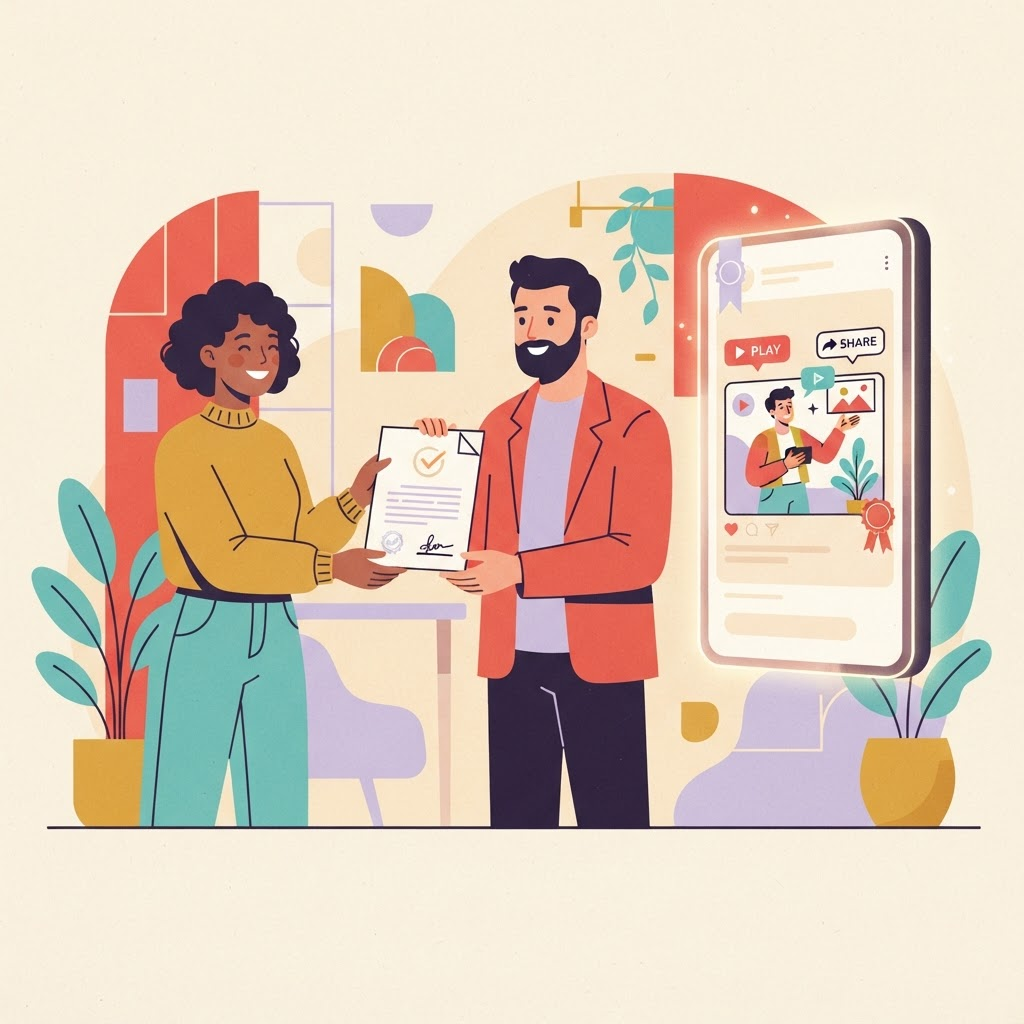
The safest situations are straightforward: you made the video, the creator gave you specific permission, or the work comes with a license that covers what you plan to do. Keep a record of permission, especially for brand, client, or paid work.
A useful request is specific and easy to answer. Tell the creator who you are, identify the exact video, explain where it will appear, whether you will edit it, and whether the project is commercial.
- Describe where and how the video will be used.
- Ask whether editing, cropping, captions, and commercial use are allowed.
- Agree on the exact credit wording and link.
- Ask how long the permission lasts.
- Keep the creator’s reply or license details.
A simple permission message
A short message can say: “May I repost your video at this link on my website and social account? I would use the full clip without changing its meaning, credit you as @username, and link to the original. The post would not be a paid advertisement.” Change the wording to match your real plan.
Do not hide important details in a vague request. If the video will promote a product, appear in paid media, or be edited substantially, say so before the creator agrees.
Attribution does not replace permission
Credit is respectful and may be required by a license, but writing “credit to the owner” does not by itself authorize copying. Permission and attribution answer different questions: whether you may use the work, and how you should acknowledge its creator.
Good attribution usually names the creator, includes the creator’s handle, and links to the original post where practical. Follow the exact credit language in the permission or license.
Music and people can add more rights
A TikTok video can contain several protected elements: the video itself, music, artwork, a performance, a brand mark, and a person’s likeness. Permission from the uploader may not cover every separate element.
Commercial campaigns deserve particular care. Platform music licenses may not carry over to another website or advertisement. A person appearing in a clip may also have privacy or publicity rights depending on the location and use.
Fair use is not an automatic label
Some legal systems allow limited uses for purposes such as criticism, commentary, reporting, teaching, or parody. These rules are fact-specific. Simply writing “fair use,” using only a few seconds, or making no money does not automatically make a use lawful.
If you intend to rely on an exception rather than permission, get advice appropriate to your country and project. Linking to the original is often a simpler alternative.
Think before reposting
Context matters. A creator may be comfortable with personal offline saving but not with a repost, compilation, advertisement, or altered version. Avoid edits that misrepresent the creator or remove context around a sensitive topic.
When in doubt, link to the original post instead. That sends viewers to the creator, preserves the surrounding caption and comments, and avoids making a separate public copy.
Keep useful records
Save the original link, the date permission was granted, screenshots or messages showing the agreement, and any conditions. Put these records in the same project folder as the downloaded file.
If a creator later withdraws permission, review the agreement and respond respectfully. For casual permission without a formal contract, removing the reuse may be the fairest and simplest response.
Responsible-use checklist
Before publishing a downloaded video, work through a final review. This small pause can prevent harm and misunderstandings.
- Do I own this video or have clear permission?
- Does the permission cover this platform and purpose?
- Are commercial use and editing allowed?
- Have I credited and linked the creator as agreed?
- Could the reuse expose private or sensitive information?
- Does the clip contain music or other work needing separate clearance?
- Would linking to the original be a better choice?
Keep reading
How-to guide
How to download TikTok videos on any device
A complete device-by-device guide to saving a TikTok video when you have permission from its creator.
Video quality
How to save TikTok videos without losing quality
Understand resolution, compression, formats, and the small choices that help preserve a clean copy.